Key Takeaways
- A common gift card scam starts when someone asks you to buy a card and send them the card number, PIN, or a photo of the card. Once those details are shared, the balance can be taken even if you still have the physical card.
- Fake giveaways, code generators, support accounts, phishing messages, and unknown apps often use urgency or a free reward to make you act before checking the source.
- Redeem a gift card through the official website or app of the company that issued it. A page having HTTPS, reviews, logos, or business details does not by itself prove that the offer is genuine.
- If you already shared a gift card number or PIN with a scammer, contact the gift card company as soon as possible and keep the card and purchase receipt if you still have them.
Gift card scams often work because the payment is difficult to reverse after the card number and PIN reach the scammer. Someone may contact you through a call, email, social media account, or messaging app and create a convincing reason for why a gift card is urgently needed.
The safest approach is to look at what the person is asking you to do rather than trusting the appearance of the message. A familiar logo or professional looking website can be copied, while requests for gift card PINs, account passwords, OTPs, or payment to release a supposedly free reward are much stronger warning signs.
FTC explicitly warns that scammers commonly ask people to buy gift cards and then provide the number and PIN. It also says people who already shared those details should report the scam to the gift card company quickly. (Consumer Advice)
Why Gift Card Scams Are Common
Gift cards become attractive to scammers because the value can often be used soon after they obtain the card number and PIN. The victim may still be holding the physical card while the balance has already been taken.
Scammers also take advantage of familiar brands. A message mentioning Apple, Amazon, Google Play, or another well known company can look believable at first, especially when it arrives during a real purchase or account problem.
Urgency is another common part of the scam. The person may claim that an account will be blocked, a payment must be refunded, a family member needs help, or a prize will disappear unless you act immediately. That pressure is meant to stop you from checking the story independently.
Common Types of Gift Card Scams
Fake Gift Card Generators
Some websites and videos claim that software can generate working gift card codes after you complete a verification step. The page may show a progress bar and then ask you to download an app, complete surveys, allow notifications, or provide personal information.
A normal gift card has value because it was issued through an authorised system. A website showing an animation does not prove that it can create legitimate gift card value. If a supposed generator keeps adding requirements before revealing the code, leave the page rather than continuing through those steps.
Phishing Emails and Messages
A phishing message may say that you won a gift card, received a refund, or need to verify an account. The link can open a page designed to look similar to the real brand while collecting the details you enter.
Instead of opening the link from the message, go to the company’s official website or app yourself. This removes one of the easiest ways a scammer can send you to a copied sign in or redemption page.
Calls Asking for Gift Cards
A caller may pretend to represent a company, technical support team, government office, employer, or even someone you know. The story changes, but the important warning sign is the same when they ask you to buy a gift card and give them its number or PIN.
The FTC advises that legitimate businesses and government agencies do not tell people to buy gift cards as payment. If someone makes that request, end the conversation and contact the organisation separately through its official contact information.
Unknown Apps and APK Files
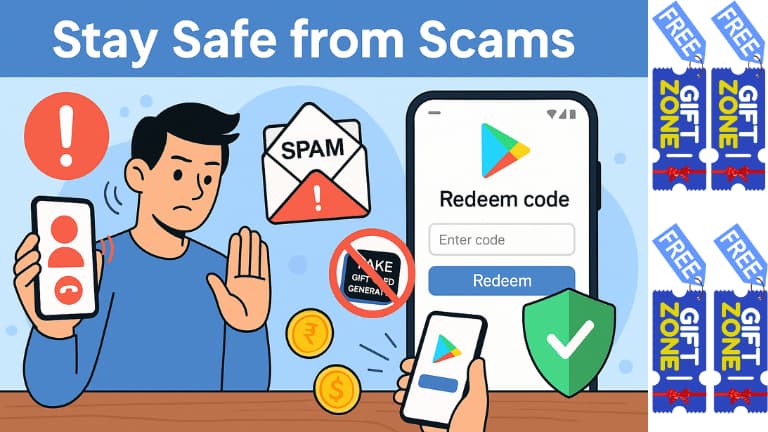
An app promising unlimited gift cards is not safer simply because it provides an installation file. Unknown APK files can request unnecessary permissions, collect account information, or install unwanted software.
Use the official app store whenever an app is supposed to belong to a known service. Even there, check the developer name and the permissions rather than assuming that an app is safe only because its name resembles a familiar brand.
Social Media Giveaway Scams
Fake giveaways often use comments, direct messages, Telegram groups, or copied social media accounts to tell someone they have won a reward. The scam becomes clearer when the winner is asked to pay a fee, provide an OTP, send a gift card first, or enter account credentials before receiving the prize.
A real giveaway can have participation conditions, but those conditions should be visible before you enter. A surprise payment that appears only after you are told that you won is a strong reason to stop.
Fake Support Accounts
Scammers sometimes reply to complaints or public comments while pretending to be customer support. They may ask you to continue the conversation privately and then request login details, verification codes, gift card numbers, or payment.
Open the company’s official website or app and use the support route listed there. Do not rely only on a username, profile photo, or badge because copied accounts can look convincing.
Market Data on Gift Card Scams
Gift card fraud remains a real problem, but scam statistics need to be tied to a specific source and year rather than being repeated without context.
The US Federal Trade Commission’s 2024 Consumer Sentinel data recorded 41,120 fraud reports where a gift card or reload card was identified as the payment method, with about $212 million in reported losses. These are reported cases, so the figures should not be treated as the total amount of gift card fraud worldwide.
The broader lesson is more useful than a long list of dramatic numbers. Gift cards remain attractive in scams because once a victim gives away the card number and PIN, the scammer may be able to use the balance quickly.
Source
Federal Trade Commission, Consumer Sentinel Network Data Book 2024.
How to Identify a Gift Card Scam
Look at What You Are Being Asked to Do
The strongest warning signs usually come from the request itself. Be cautious when someone asks you to buy a gift card to pay a bill, fix an account problem, receive a refund, help someone in an emergency, or release a prize.
A request for the card number, PIN, OTP, account password, or a photo showing the card details is another major warning sign. Once another person has those details, they may not need the physical card to use the balance.
Check the Website or Account Independently
Do not judge a page only because it has HTTPS, a company logo, business details, or positive reviews. Those things can provide useful context, but none of them proves that the specific message or offer you received is genuine.
Type the official website address yourself or open the company’s official app. If the message claims to come from customer support, compare the contact details with those published by the company rather than using the phone number or link sent by the person contacting you.

Be Careful With Free Reward Claims
A genuine promotion should explain what you need to do before you take part. Be cautious when new requirements keep appearing after you have already entered, especially requests for payment, account passwords, OTPs, or gift card numbers.
FreeGiftZone also publishes reward and giveaway information, but those offers should be judged by the same rule. Check the current conditions shown with the reward rather than trusting it only because it appears on FreeGiftZone.
Look for Red Flags
- Someone asks you to buy a gift card as payment for a bill, refund, emergency, account problem, or prize.
- You are asked to send the gift card number, PIN, OTP, password, or a photo showing the card details.
- The person creates urgency and discourages you from checking the request with the company or someone you trust.
- A supposedly free reward suddenly requires payment or sensitive account information before it can be released.
How to Stay Safe
Use Official Redemption Pages
Enter a gift card only through the official redemption process provided by the company that issued it. If someone sends you a redemption link through an unexpected message, open the company’s website or app separately instead of following that link.
Protect the Card Number and PIN
Treat the card number and PIN like the value stored on the card. Do not send them to someone who claims they need the details to process a refund, verify the card, unlock a prize, or provide technical support.
Keep Purchase Information
If you bought the card yourself, keep the receipt and the card until the balance has been used successfully. These details can be useful if the card was tampered with or if you need to report fraud to the issuer.
Act Quickly After a Scam
If you already gave the card number or PIN to a scammer, contact the gift card company as soon as possible and explain what happened. Ask whether the balance can be stopped or recovered, and keep any receipt, messages, screenshots, or other evidence connected to the incident.
The FTC specifically recommends reporting a compromised gift card to the issuing company and keeping the card and receipt when possible. (Consumer Advice)
Common Gift Card Scams and what you should do
| Scam type | What you may see | Main warning sign | Safer response |
|---|---|---|---|
| Fake code generator | A website claims it can produce working codes after verification. | It keeps asking for downloads, surveys, permissions, or personal details before showing anything useful. | Leave the page and use the official brand or a clearly documented reward source. |
| Phishing message | An email, text, or social message says you won a gift card or need to fix an account. | The link leads to a login, redemption, or payment page you did not open yourself. | Open the company’s official website or app separately and check there. |
| Gift card payment scam | Someone asks you to buy gift cards for a bill, refund, emergency, or account problem. | They want the card number or PIN after you buy it. | Stop the conversation and contact the claimed organisation through its official contact details. |
| Fake support account | A social media account offers to solve your problem privately. | It requests codes, passwords, OTPs, or payment. | Contact support from the company’s official website or app instead. |
Quick checks before you redeem
| Check | What you are trying to confirm | Practical way to check |
|---|---|---|
| Redemption page | You are entering the code with the actual gift card issuer. | Open the issuer’s website or app yourself instead of using an unexpected link. |
| Card details | Nobody else has received your card number or PIN. | Never send a photo of the card or its code to someone claiming they need it for verification. |
| Payment request | The card is not being demanded as payment for a bill, refund, emergency, or prize. | Stop if someone tells you to buy a card and then send them its details. |
| Purchase evidence | You still have information that may help if something goes wrong. | Keep the card and receipt until the balance is used or the problem has been resolved. |
FAQs
Can a genuine website give away free gift cards?
Yes, companies and reward platforms can run genuine promotions or provide gift cards through reward programmes. The important part is whether the conditions are explained clearly before you participate. A free reward becomes suspicious when you are unexpectedly asked to pay money, share a gift card PIN, provide an OTP, or give away account credentials before receiving it.
Are gift card numbers and PINs safe to share?
No. Anyone who obtains the information needed to redeem the card may be able to use its balance. Do not send the number, PIN, or a clear photo of the card to someone who says they need it for a refund, prize, payment, or verification.
Why do scammers ask for gift cards?
Gift cards can let scammers obtain value quickly after receiving the card number and PIN. They also use gift cards because victims may have fewer options to reverse the transaction after the balance has been taken.
How can I tell whether a gift card offer is genuine?
Do not depend on one sign such as HTTPS, positive reviews, business registration, or a familiar logo. Check the offer through the company’s official website or app, understand what you must do before participating, and stop if someone asks for payment or sensitive information that does not make sense for the reward.
Before You Leave the Page
Gift card scams change their stories, but the request usually gives away the problem. Someone who wants you to buy a card and send the number or PIN is not using a normal payment or refund process.
If you are unsure about a gift card message, open the issuer’s official website or app independently and check there before doing anything. If you already shared the card details with a scammer, contact the gift card company quickly because waiting gives the scammer more time to use the balance.
FTC similarly advises victims to contact the gift card company quickly, ask whether money can be recovered, and retain the card and receipt where possible. (Consumer Advice)